
Welcome to Zimbabwe – Titambire Maua Zimbabwe
Prehistoric San paintings, historic stone ruins bearing witness to a long-forgotten era, untouched, rugged landscapes, green forests and – not to forget – the mighty Victoria Falls with their spectacular rainbows and the majestic Zambezi River: hardly any country in Africa offers travellers as much wild beauty and as many breathtaking natural wonders as Zimbabwe.
Harare is a good starting point for a round trip that can end in Victoria Falls. In the lively capital, the National Gallery, the many sculptors’ cooperatives and the street markets are well worth a visit. Excursions to Domboshava or Epworth give a first impression of gigantic rock formations, and a city tour reveals a great deal about the country’s history through its architecture.
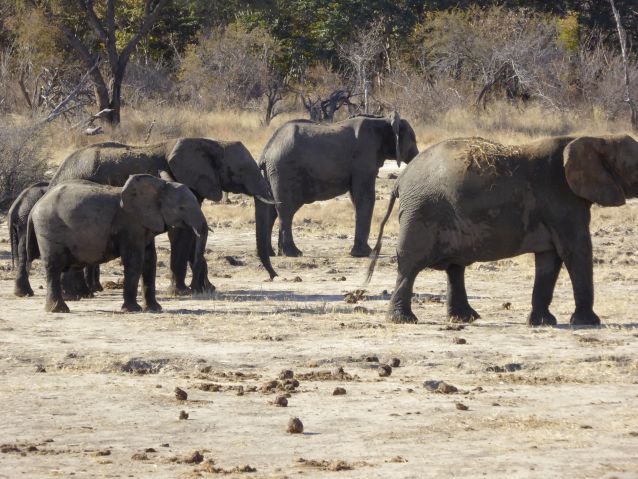
Zimbabwe has numerous national parks that attract safari tourists and offer authentic wildlife encounters. Hwange National Park is the largest and is easy to reach from Victoria Falls or Bulawayo.
Mana Pools, Matusadona and the private game reserves along the Zambezi and on Lake Kariba are among the most beautiful parks in Africa.
In addition to the Zimbabwean parks authority, the Chipinge and Lake Mutirikwi national parks are supported by the Zimbabwean organisation “AWARE” and its German partner AWARE Germany e.V. begleitet.
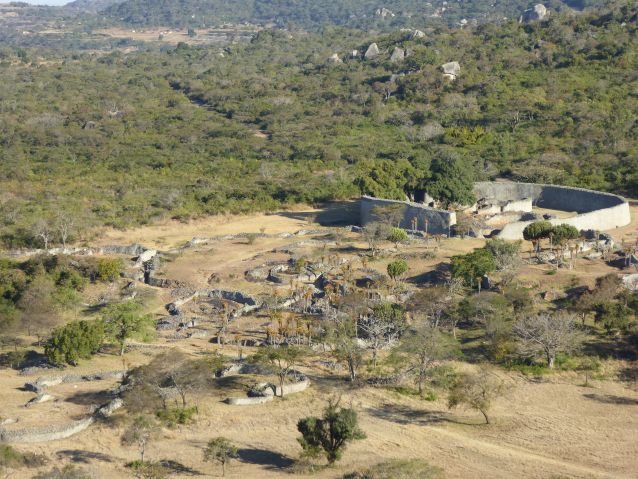
“Great Zimbabwe” is one of the few World Heritage Sites on the African continent. There you can experience at first hand Zimbabwe’s cultural development before colonialism.
Quieter than Harare but no less interesting is Bulawayo, the second-largest city, in Matabeleland. A large natural history museum, a railway museum, a National Gallery and a street market selling wooden crafts are among the attractions of this city of wide, jacaranda-lined streets. An alternative city tour to Makokoba, the oldest township, with its fascinating market for traditional remedies and several beer halls, is well worthwhile.
From Bulawayo you can reach Matobo National Park with its bizarre rock formations. On a guided walking safari, there is a good chance of observing black rhinos in their natural habitat.
“My beautiful home” is an initiative in the Matobo region that has revived the traditional Matabele-style painting of houses.
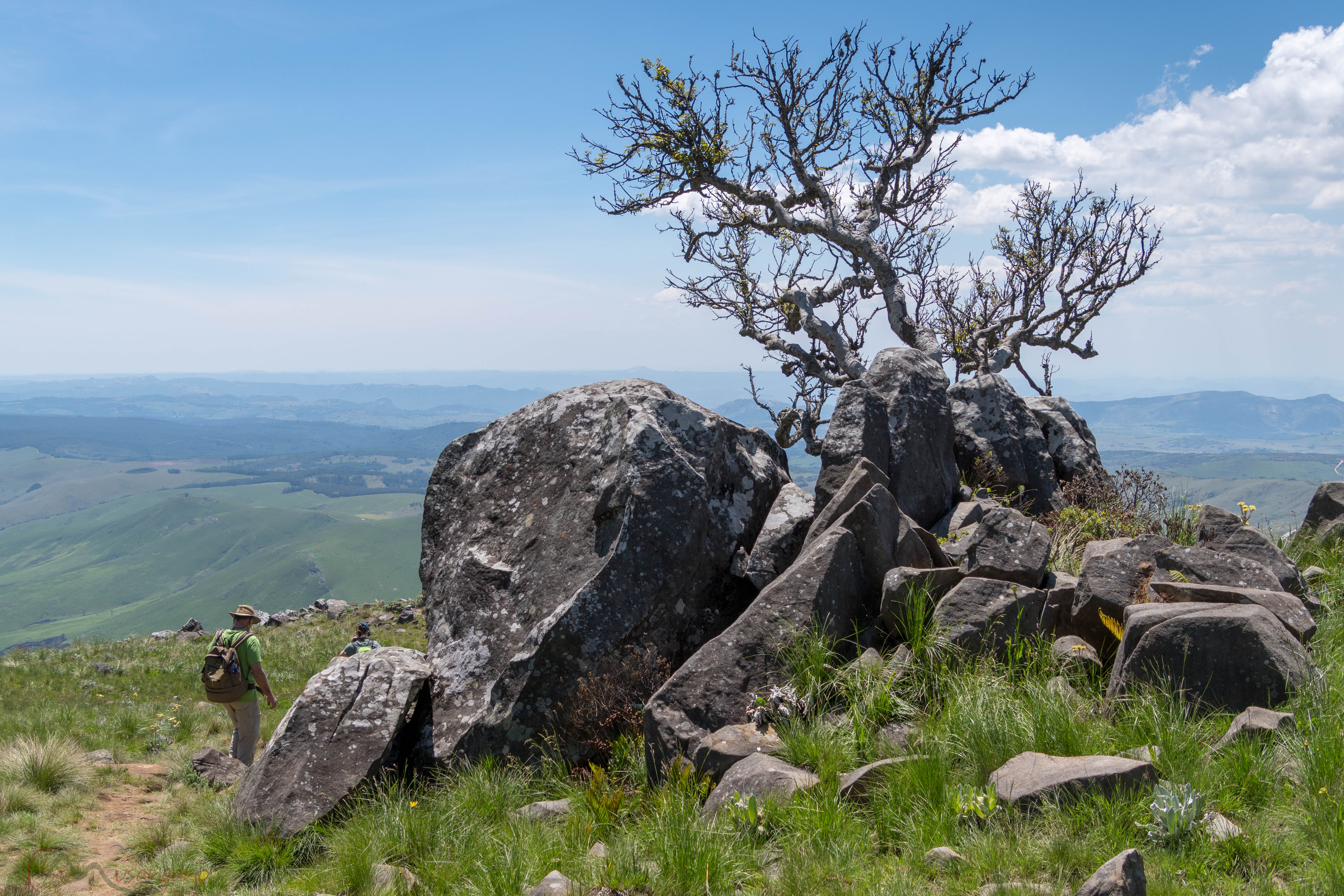
The Eastern Highlands, a region in the east of the country bordering Mozambique, are unfortunately often left out of round trips – quite unjustly! Here Africa shows itself from its most beautiful side: rugged landscapes, gigantic granite mountains and fascinating rock formations alternate with long ranges of hills and green forests. Several national parks offer a wide range of activities, including hiking, climbing, horse riding, fishing, golf and birdwatching.
Historic excavation sites, rock and cave paintings and the “Mutarazi Falls”, Africa’s second-highest waterfall, make the Eastern Highlands an exceptionally varied part of Zimbabwe.
And Mutare, the lively provincial town, is well worth a visit.
Birgit Kleine Altekamp and Gerd Eggert, who run “Musangano” Lodge (https://www.musangano.com/), offer helpful tips for a stay in the Eastern Highlands. Part of Musangano Lodge’s concept is organising authentic encounters between locals and visitors. Visitors gain insights into the everyday working lives of Zimbabweans and thus a realistic understanding beyond common stereotypes.
Christa Zeller, who runs the “Ubuntu” backpackers in Mutare (https://www.ubuntubackpacker.com/) and, with the association “Bongai Shamwari”, a kindergarten and a women’s project, also gives valuable tips.
All three are members of the Deutsch-Simbabwische Gesellschaft e.V.
Every year, the Deutsch-Simbabwische Gesellschaft e.V. offers study tours to Zimbabwe in small groups. These tours also include visits to some of our project partners and numerous artists.
If you have any questions about study tours or individual travel, please write to us.
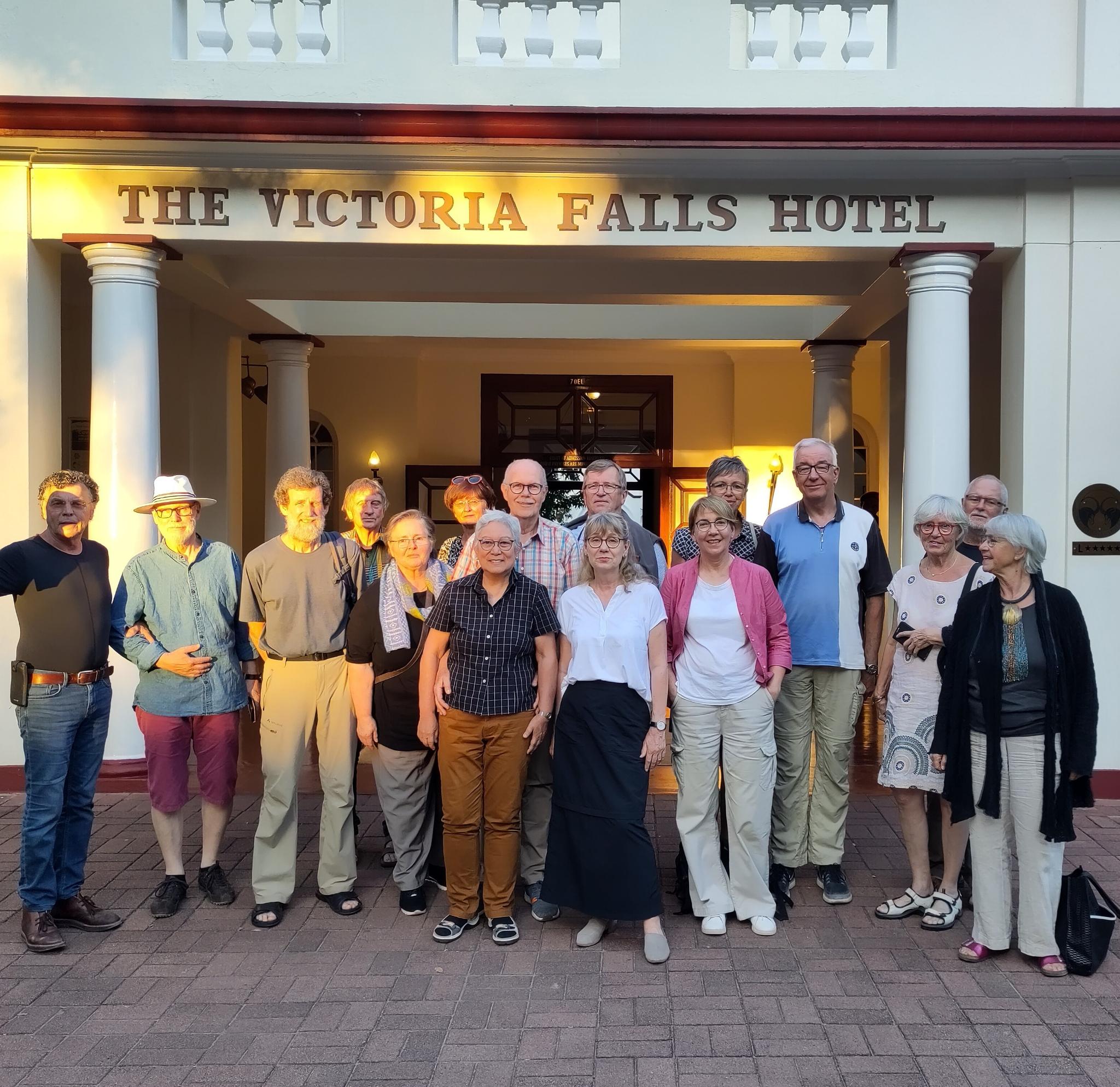
Above: a study tour group in front of the famous “Victoria Falls Hotel”
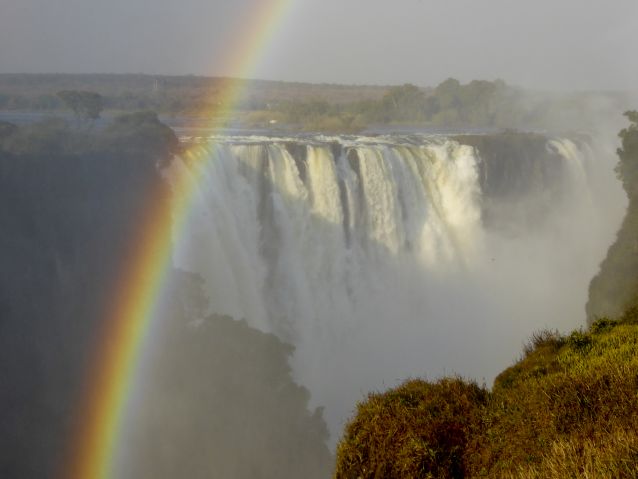
Victoria Falls is one of the largest waterfalls on earth and one of the Seven Natural Wonders of the World.
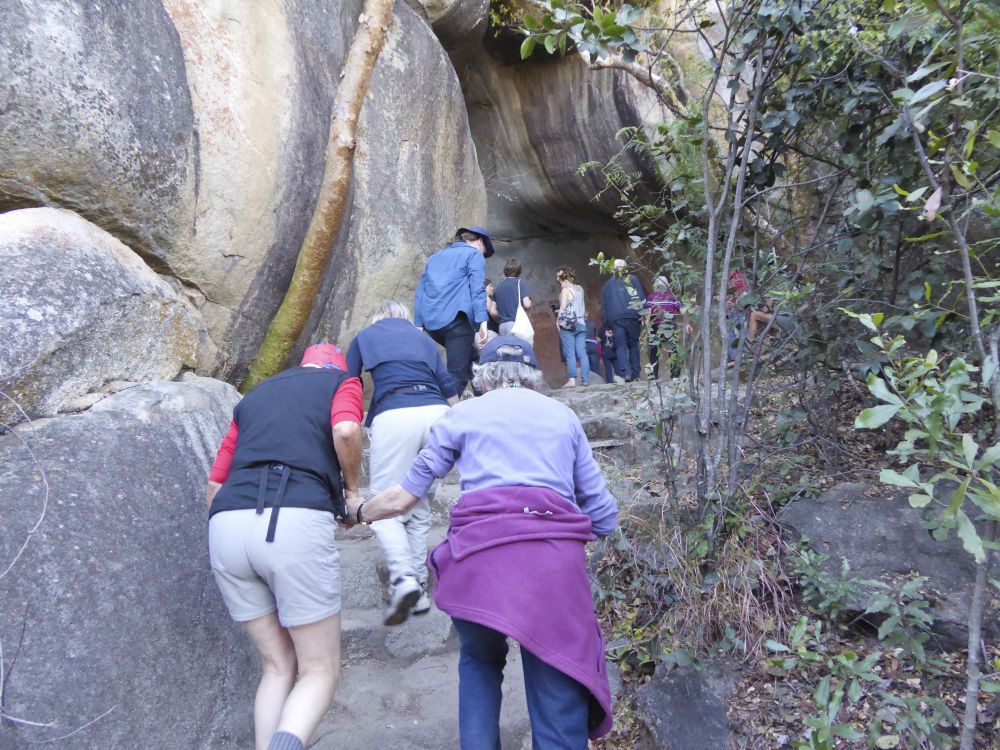
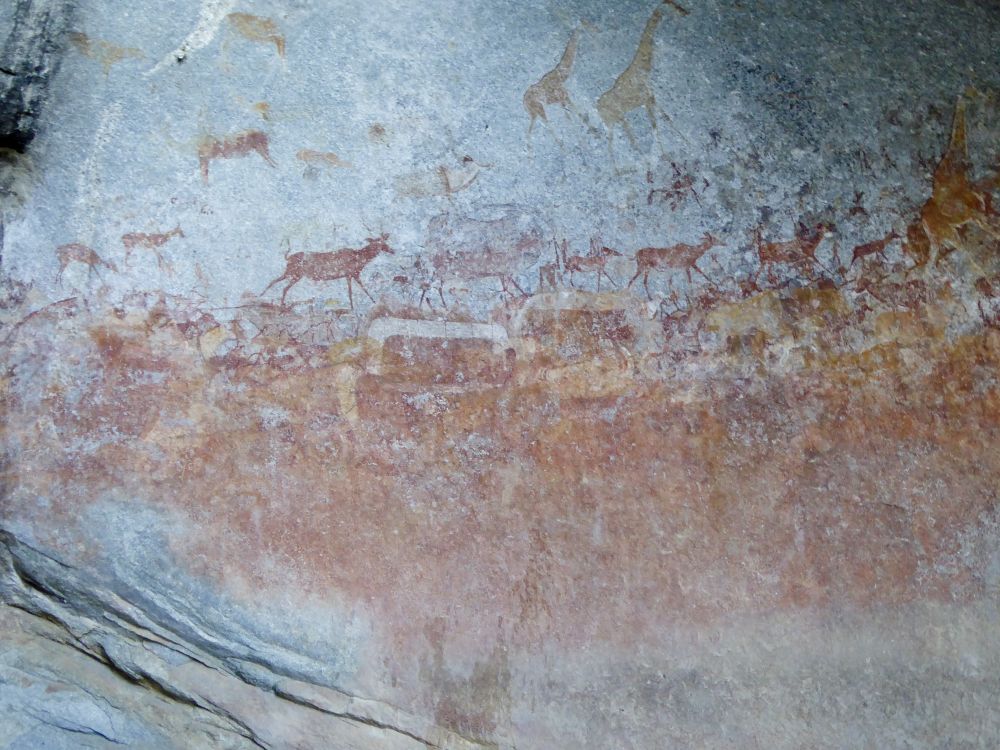
The Matopo Hills south of Bulawayo are home to one of the richest sites of Stone Age art and cave paintings in southern Africa. They have been on the UNESCO World Heritage List since 2003.
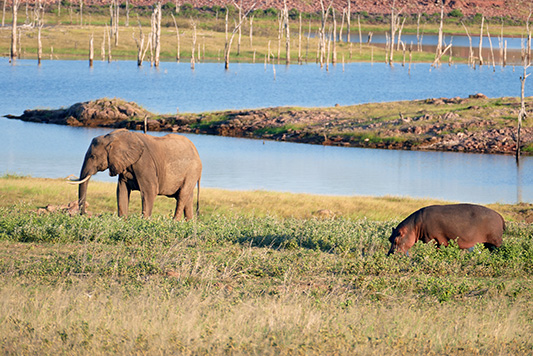
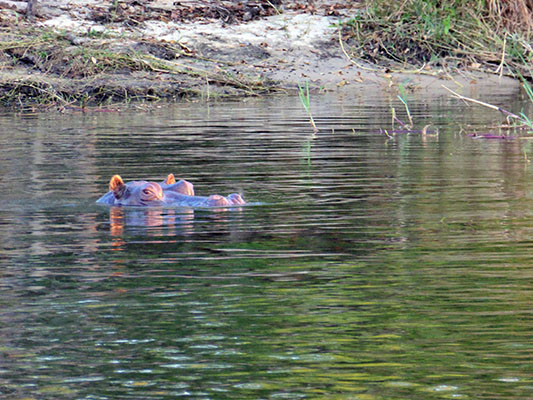
Elephant and hippo on Lake Kariba
The national parks on the Zambezi and on Lake Kariba are particularly attractive.
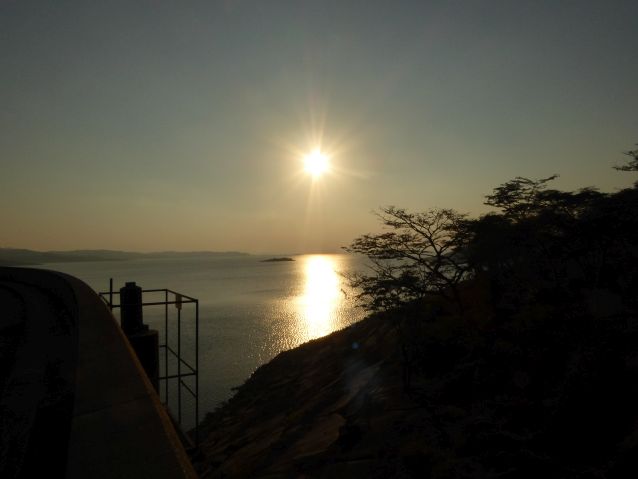
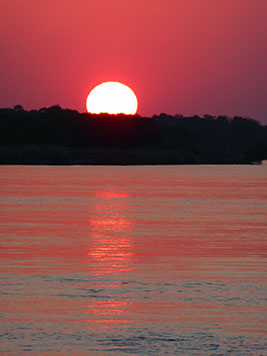
Evening on Lake Kariba (reservoir)
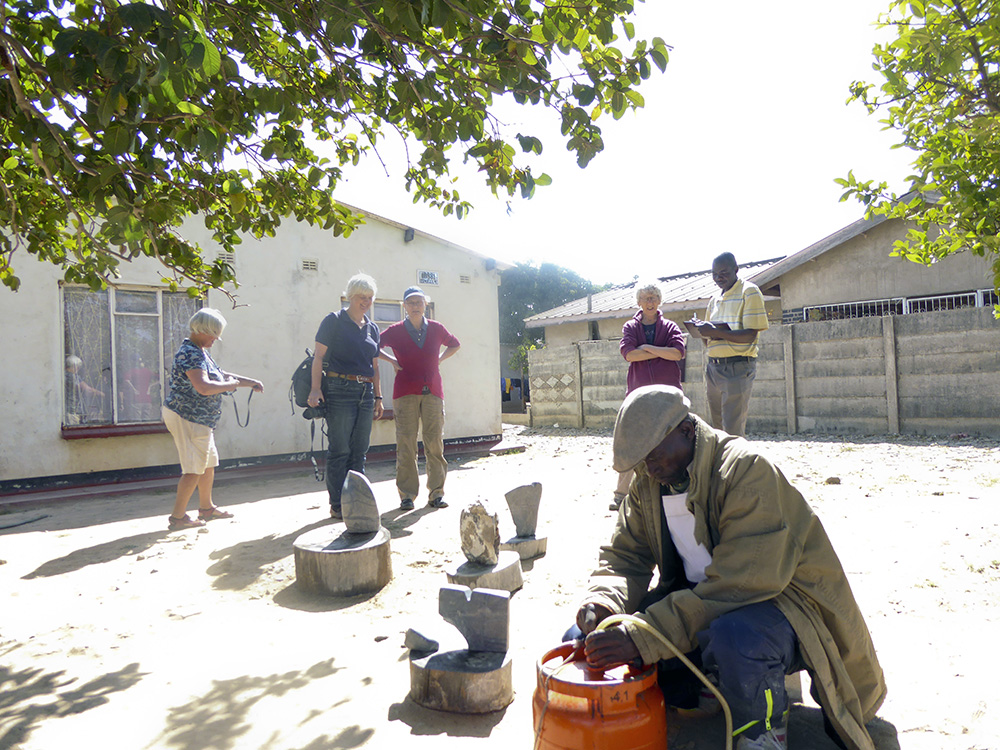
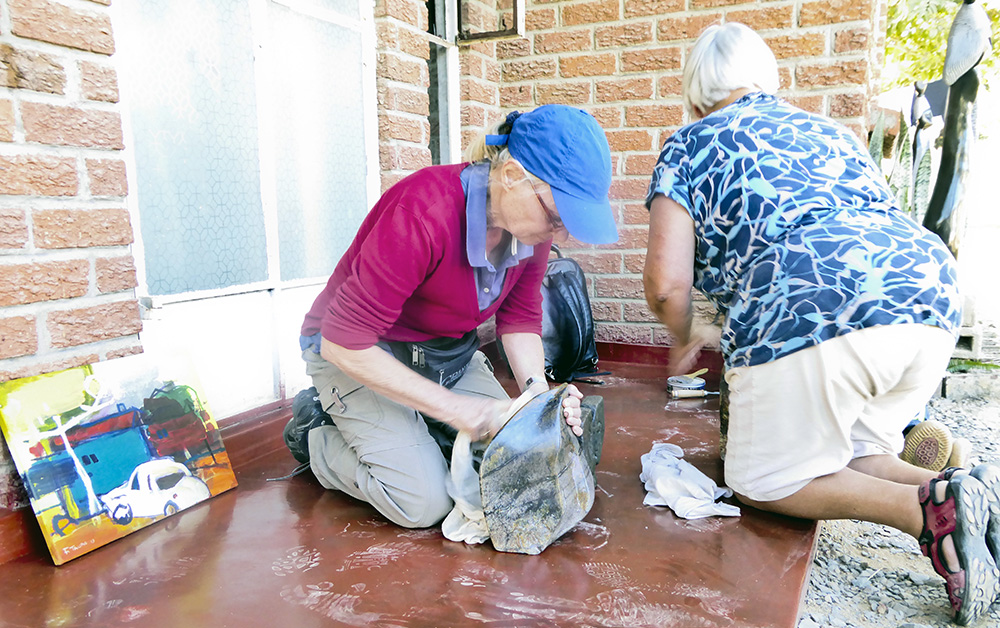
Richard Mupumha and his “sculpture students”
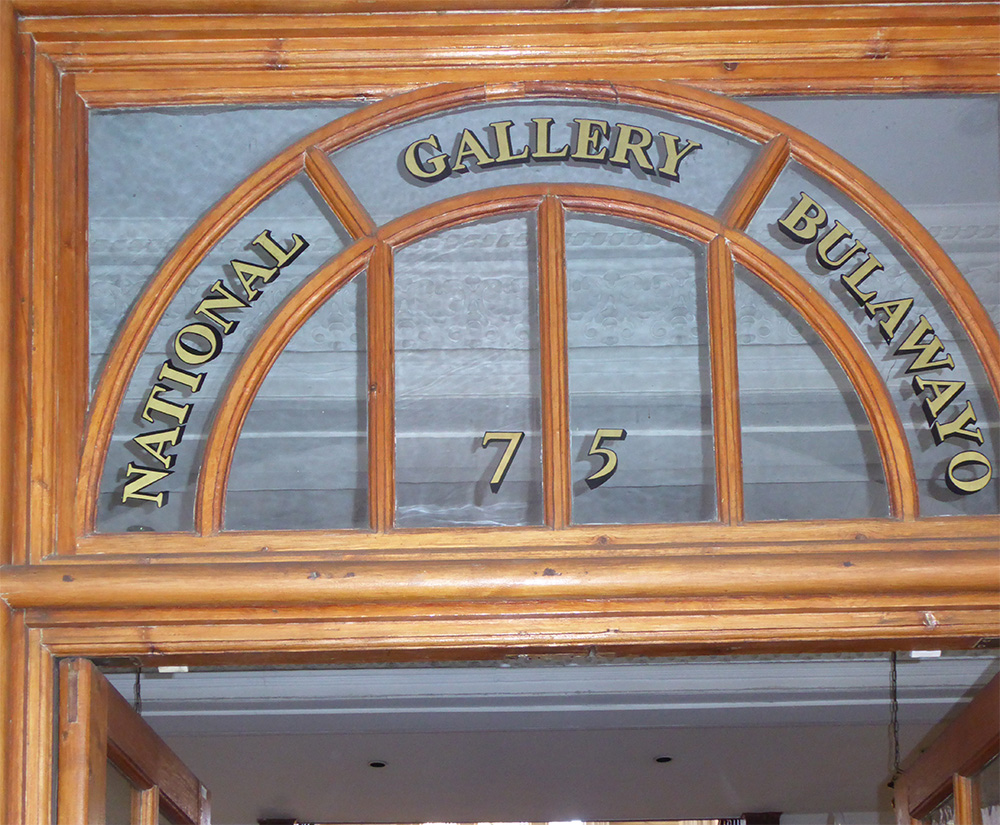
Entrance to the National Gallery
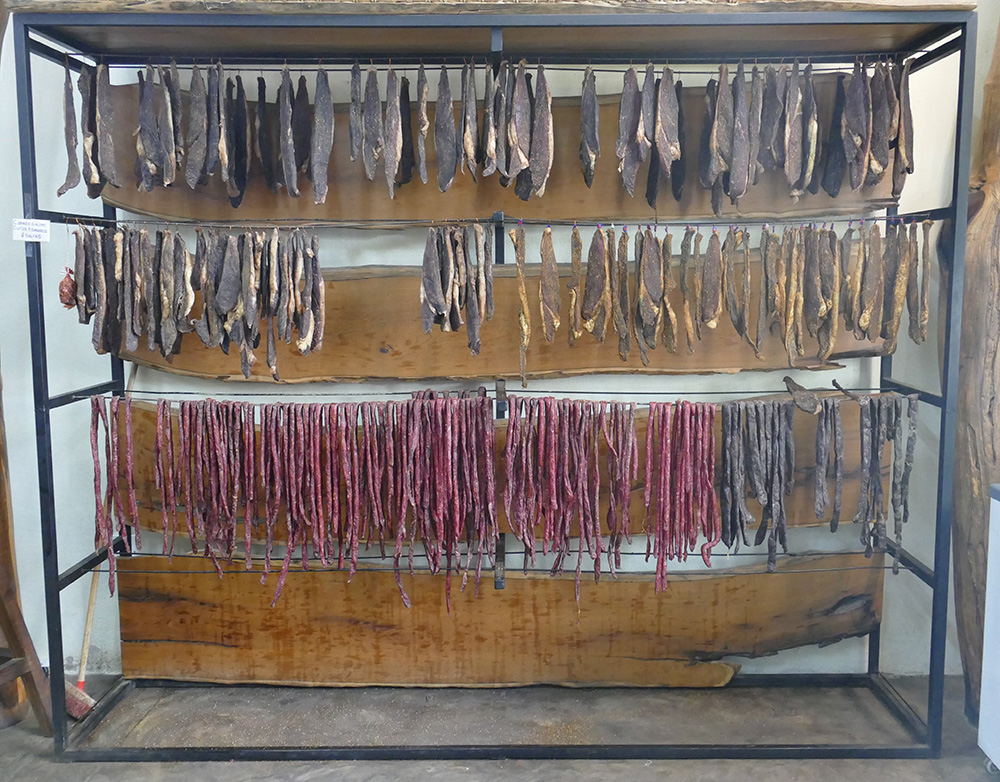
Biltong – dried meat, ideal for hungry tourists on the road
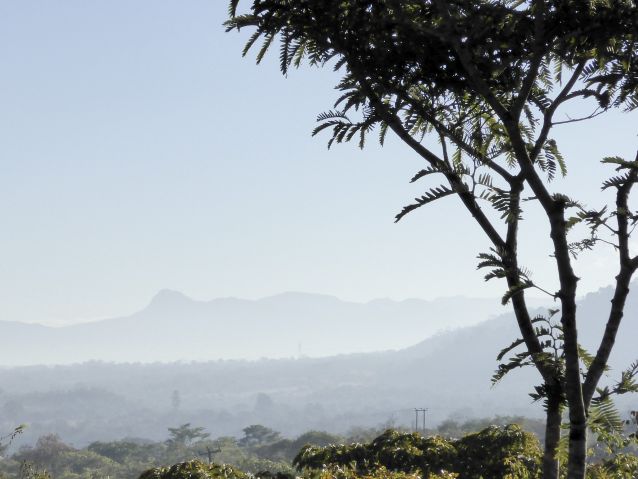
View of the Eastern Highlands in the distance